Source Recycled Household Garbage Bag for Trash, Food, and Shopping
Find 30 options for recycled household garbage bag from Chinese manufacturers. Compare specifications like thickness, material, and sealing types to select the right solution for waste management needs.
Key considerations
Products List




Comprehensive Sourcing Guide
Strategic Sourcing Guide for Recycled Household Garbage Bags
Procuring recycled household garbage bags requires a nuanced understanding of material science, supply chain logistics, and regulatory compliance. The market for these products is characterized by a wide variance in specifications, ranging from thin, disposable liners to heavy-duty containers designed for industrial waste. Buyers must navigate a complex landscape where "recycled" claims must be substantiated by verifiable material compositions and manufacturing processes. This guide outlines the critical factors for sourcing these products effectively, focusing on the technical realities observed in current market listings and the necessary due diligence for B2B procurement.
Material Composition and Biodegradability Standards
The foundation of any garbage bag procurement strategy lies in the raw materials. In the current market, the term "recycled" often coexists with "biodegradable" or "compostable" attributes, creating a distinct category of eco-friendly packaging. Buyers must distinguish between bags made from post-consumer recycled (PCR) content and those made from virgin plastic with added biodegradable agents. The supplied data indicates that raw materials frequently include blends such as Pbat/PLA combined with cornstarch. These materials are designed to degrade under specific conditions, offering an alternative to traditional polyethylene.
However, the market also lists standard High-Density Polyethylene (HDPE) and Polyethylene (PE) as primary materials. When sourcing, it is essential to verify the specific polymer type. While PE bags are ubiquitous due to their durability and low cost, they are not inherently biodegradable unless treated with specific additives. The data highlights that some products are explicitly labeled as "Biodegradable and Compostable," while others are simply "Recyclable." A buyer must clarify whether the requirement is for a bag that breaks down in a composting facility or one that is simply made from recycled feedstock and can be reprocessed. The presence of "100% Eco Water-Based Ink" in the printing process is a significant positive indicator for environmental compliance, reducing the chemical load on the recycling stream compared to solvent-based inks.
Technical Specifications and Performance Metrics
Technical specifications dictate the suitability of a garbage bag for its intended application. The observed market data reveals a broad spectrum of thicknesses, ranging from 6 to 80 microns, with specific listings noting ranges like 8 to 100 microns. This variance directly correlates to the bag's strength and intended load. For general household use, thinner gauges may suffice, but for heavy-duty applications involving construction debris or large volumes of waste, higher micron counts are necessary. The data specifies a "Weight Limit" of 5-10 kg for certain models, suggesting that not all bags in the category are suitable for heavy lifting.
The physical dimensions are equally critical. Sizes are often customized, with standard listings offering options like 10L, 20L, 30L, up to 240L. The "Size/Thickness" specification notes general increments of 12, 15, and 20 microns, but also allows for customization. Buyers should verify the exact dimensions against their waste bin specifications to ensure a proper fit. A bag that is too small will tear under the weight of the contents, while one that is too large may be difficult to secure or may waste material. Furthermore, the "Hardness" attribute is listed as "Soft," which is typical for flexible packaging, but the "Tentile" (tensile strength) is described as "High Strength." This combination suggests a material engineered to stretch without breaking, a crucial feature for preventing leaks during transport.
Design Features and Functional Attributes
The functional design of the garbage bag significantly impacts user experience and operational efficiency. The market offers various handle types, including "Hand Length Handle," "Patch Handle," and "Drawstring" mechanisms. Drawstring bags are particularly advantageous for hygiene, allowing users to close the bag securely without touching the contents, which is a standard requirement for medical or high-risk waste. The "Sealing" method is another critical variable; options include "Heat Seal" and "Drawstring." Heat sealing provides a robust, leak-proof closure, whereas drawstrings offer convenience.
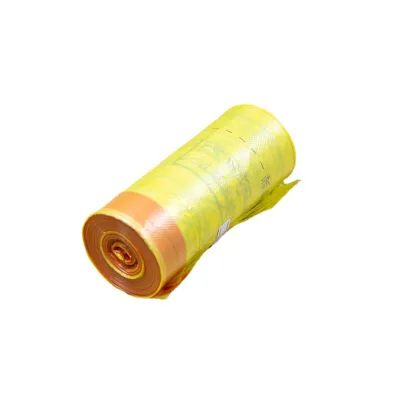
The "Bag Type" is diverse, encompassing "Vest Bag," "T-Shirt Bag," "Produce Bag," "Roller Bag," and "Flatba" (likely Flat Bag). Vest and T-shirt styles are common for retail and household use due to their ease of carrying, while roller bags are often used for larger commercial waste. The "Printing" capabilities are extensive, with "Gravure up to 8 Color" and "Offset Printing" available. This allows for extensive branding and color customization, which is vital for companies implementing waste segregation programs where color-coding is used to distinguish between different waste streams (e.g., blue for recycling, black for general waste). The data confirms that colors can be customized, including Blue, White, Green, and Red, or left as "Multicolor."
Compliance, Certification, and Environmental Claims
Navigating the regulatory landscape for recycled and biodegradable products is complex. Buyers must be vigilant regarding the verification of environmental claims. While the data lists "Biodegradable" and "Compostable" as attributes, these terms are subject to specific regional standards. A product labeled as biodegradable may require industrial composting facilities to break down effectively, rather than degrading in a home compost or natural environment. The "Standard" field in the data indicates that products can be "Customized," which implies that compliance with specific local or international standards is often a negotiated term rather than a fixed baseline.
Buyers should request documentation verifying the "Raw Materials" source. If a supplier claims the use of recycled content, they should provide a chain-of-custody certificate or a material safety data sheet (MSDS) confirming the percentage of PCR content. Similarly, for biodegradable claims, third-party testing results from recognized bodies are essential. The data mentions "100% Eco Water-Based Ink," which is a specific compliance feature that reduces volatile organic compound (VOC) emissions. However, without specific certification numbers or test reports, this remains an observation rather than a guaranteed standard. Procurement teams must verify that the "Product Name" and "Attribute" descriptions align with the actual regulatory requirements of the destination market.
Cost Drivers and Economic Considerations
The cost of recycled household garbage bags is influenced by several dynamic factors, primarily raw material prices, customization levels, and order volume. The observed "MOQ range" spans from 2 to 1,000,000 units, indicating that suppliers cater to both small boutique buyers and large industrial distributors. The "Price range" of 0.01 to 1750 USD reflects the vast difference between a single sample unit and a bulk container shipment.
Customization is a primary cost driver. Requests for specific "Size/Thickness," "Logo Printing," or unique "Color/Printing" configurations will increase the unit cost compared to standard off-the-shelf products. The "Making Process," described as "Composite Packaging Bag," suggests a multi-layer manufacturing technique that may incur higher processing costs than single-layer extrusion. Additionally, the "Packing" method, whether "by Carton," "in Carton," or "Turnover Box," affects logistics costs. Bulk packing in cartons is generally more cost-effective for shipping, while turnover boxes might be required for specific returnable logistics systems. Buyers should analyze the total landed cost, including packaging and shipping, rather than focusing solely on the unit price.
Supplier Evaluation and Quality Control Protocols
Selecting a reliable supplier is paramount for ensuring consistent quality. The data indicates that the "prod_origin" is China, a major manufacturing hub for packaging materials. When evaluating potential suppliers, buyers should look for transparency in their "Making Process" and "Printing Process." A supplier capable of "Gravure up to 8 Color" printing demonstrates a high level of technical capability. It is also crucial to verify the "prod_standard" adherence. While many standards are listed as "Customized," the supplier must have a robust internal quality control system to ensure that custom orders meet the agreed-upon specifications for thickness, tensile strength, and sealing integrity.
Quality control should include sampling and testing before full-scale production. Buyers should request physical samples to test the "Weight Limit" and "Sealing" integrity. The "Hardness" and "Tentile" attributes should be verified through tensile strength tests to ensure the bag will not tear under expected loads. Furthermore, the "Ink Type" should be checked to ensure it does not leach harmful substances, especially if the bags are intended for food-related waste or recycling streams. A supplier that offers "Customized" solutions should also provide a clear timeline for production and delivery, as lead times can vary significantly based on the complexity of the order.
Long-Term Procurement and Sustainability Strategy
For organizations committed to sustainability, the long-term procurement of recycled household garbage bags involves more than just purchasing a product; it requires a strategic partnership with suppliers who can evolve with regulatory changes. The "Feature" list includes "Recyclable," "Biodegradable," and "Disposable," highlighting the need for a balanced approach. While biodegradable options are attractive, their end-of-life management must be considered. If local infrastructure does not support composting, a biodegradable bag may not offer the intended environmental benefit.
Buyers should consider the "Usage" diversity, which includes "Garbage," "Household," "Food," "Apparel," and "Electronic" waste. A versatile bag that can handle multiple waste streams simplifies logistics but must meet the highest safety standards for the most demanding application. Establishing a long-term relationship with a supplier who can provide consistent "Customized" sizes and materials will help in maintaining a stable supply chain. Additionally, suppliers who utilize "Eco Water-Based Ink" and offer "Recyclable" options align better with corporate sustainability goals. Procurement teams should regularly review the "prod_standard" and "prod_model" to ensure they remain compliant with evolving environmental regulations and market expectations. By focusing on these strategic elements, buyers can secure a supply of high-quality, eco-conscious garbage bags that meet both operational and environmental objectives.
FAQs
What raw materials are used for biodegradable recycled bags?
Raw materials often include blends of Pbat, PLA, and cornstarch for biodegradable options. Standard versions may use HDPE or PE. Buyers must verify the specific composition to ensure the bag meets compostability or recycling requirements.
Which thickness range is available for heavy-duty bags?
Thickness ranges from 6 to 80 microns or 8 to 100 microns depending on the model. General options include 12, 15, and 20 microns. Custom thicknesses are available to meet specific weight limits and durability needs.
Can these bags be customized with logos and colors?
Yes, customization is available for logos, colors, and sizes. Printing methods include offset and gravure up to 8 colors using eco water-based ink. Buyers can specify requirements for blue, white, green, red, or multicolor designs.
What handle types are offered for household use?
Handle types include hand length handles, patch handles, and drawstrings. The sealing methods vary between heat seal and drawstring closures. These features allow for secure closure and easy carrying for various waste types.
How are the bags packed for shipping?
Packing options include cartons and turnover boxes. The standard packing is by carton, though specific logistics needs may require turnover boxes. This ensures safe transport of the bags from the factory in China to the buyer.
What is the minimum order quantity for these bags?
The minimum order quantity ranges from 2 to 1,000,000 units depending on the supplier and customization level. Small buyers can order as few as 2 units, while large distributors may place orders up to one million.
Are the inks used in printing environmentally safe?
Yes, 100% eco water-based ink is used for printing. This reduces chemical load compared to solvent-based inks. It supports environmental compliance and ensures the bags are safer for recycling streams and food-related waste applications.